
2026-10-17 ·
Emergency Roof Tarping: What to Do Until Repairs Happen in Jackson, TN
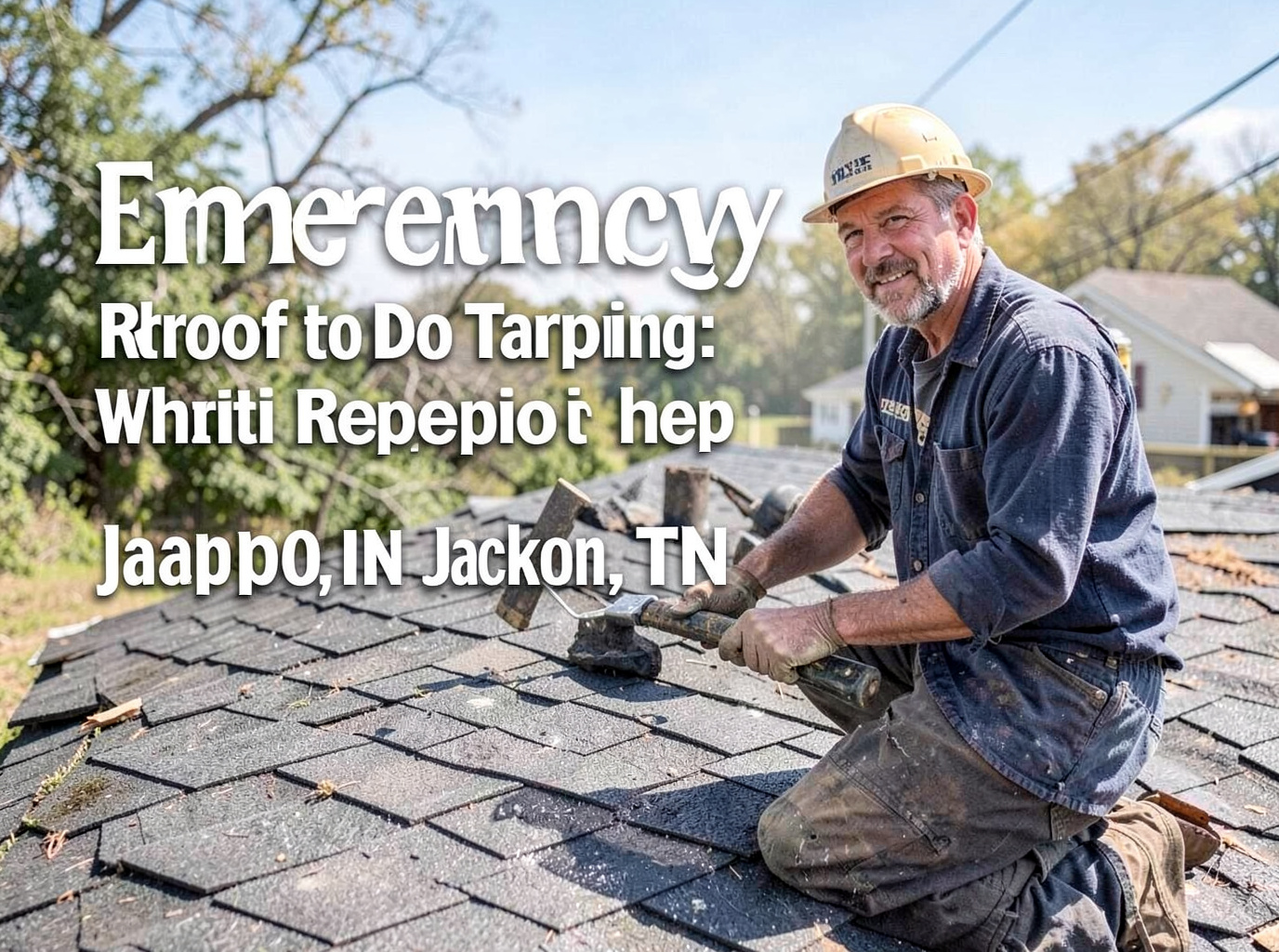
In Jackson, TN, emergency roof tarping should begin within 4–6 hours of discovering active leaks to limit interior water damage until a roofing contractor performs full repairs.
Assessing Damage Before Tarping
Start by inspecting from the ground or attic in neighborhoods like Downtown Jackson and Bemis where many homes date to the early 1900s with steep asphalt shingle roofs. Look for missing shingles, punctures from falling limbs near Casey Jones Village, or wind uplift along ridges common after Madison County thunderstorms. Note any sagging decking visible from inside before climbing. In Northside areas with older framing, check for soft spots that could collapse under added tarp weight. Document everything with photos for insurance. This assessment prevents wasting time on tarps that will fail quickly on compromised structures. Humid subtropical summers accelerate mold once water enters, so prioritize leaks over cosmetic issues. Cool winter nights bring condensation that can worsen hidden moisture behind tarps if not addressed promptly.
Choosing and Preparing Materials
Select a heavy-duty 10-mil reinforced polyethylene tarp sized 4–6 feet larger than the damaged section on all sides. In Jackson's hot summers, UV-resistant material holds up better than standard blue tarps that degrade in weeks. Cut the tarp on the ground to avoid working at height with loose fabric. Fold edges to create reinforced hems for rope or bungee attachment. Keep extra furring strips or 2x4s on hand for Jackson roofs where nail penetration into older decking can split wood. Store tools in a dry spot because sudden rain from Gulf moisture can arrive fast. Avoid lightweight tarps that flap in the 20–30 mph winds typical before fronts reach from Memphis. These preparations match the real conditions roofers see on jobs in Central Jackson and surrounding Madison County homes.
Securing the Tarp on Local Roofs
Run the tarp over the peak and down both sides at least 3 feet past the damage, then secure the upper edge with furring strips nailed into rafters rather than just shingles. On Bemis Historic District homes with slate or older shingles, use lead tabs or weights along eaves to avoid further punctures. Route ropes or straps over the ridge and anchor to opposite eaves or ground stakes driven at 45-degree angles. Add sandbags along the bottom edge in low-lying spots near Pringles Park where runoff pools. Check tension every 48 hours because cool winter winds and summer humidity cycles loosen fasteners. Never walk on a wet tarp. This method has kept water out of Jackson attics during multi-day waits for full storm damage roof repair.
Monitoring and Transition to Permanent Repairs
Inspect the tarp daily for tears, especially after heavy rain common in Madison County's humid subtropical pattern. Watch for pooling at low spots on flatter sections of commercial buildings or additions in North Jackson. Once the immediate threat passes, schedule an inspection through emergency roof leak repair to assess underlying decking and flashing. Many homeowners in West Jackson combine tarping with gutter checks because clogged downspouts from oak debris worsen leaks. Track interior humidity with a meter to catch early mold in the 70–80% summer range. Transition to permanent work by removing the tarp carefully to avoid scattering debris. Readers often continue with guidance on spotting hail and wind issues in the article How to Check a Roof for Hail and Wind Damage in Jackson, TN before scheduling replacement.